
Juunam · my soul.
Juunam is Persian for my soul— what you call something, or someone, you can’t bear to part with. The software keeps the receipts.
The pipeline
From a pop-up to a pocket database.
A short walkthrough of where Juunam came from, what it is right now, and where it’s heading — written plainly, no spec animation.
Spring 2025
A pop-up in Maastricht
Juunam started as a curated pop-up shop in Maastricht, Netherlands. Real items, real customers, and a working theory: people want to be more conscious about what they own and what they bring in next.
Late 2025
The idea takes shape
After the pop-up we asked a sharper question — what if everyone could carry their wardrobe and inventory in their pocket? Catalogue what you own, evaluate it consciously, decide what stays.
Spring 2026 · now
Juunam AI · the individual app
iOS + Web. Photograph an item, let Claude Vision classify it, track value and status, lend with due dates, transfer ownership in a tap. One vault per person — the database of your own things.
Next
The business layer
Extensions for shops, archivists, and resellers — integrate the same inventory on their websites and on third-party platforms. Simplify the understanding and evaluation of goods, while opening up a wider audience to sell to.
The horizon
A reliable database of made things
A trustworthy index of items produced over time — including pieces that pre-date the internet. Juunam's bet is that knowing what exists, and what each item has been worth, is the foundation for a more honest market.
The mark
A flower from a carpet.
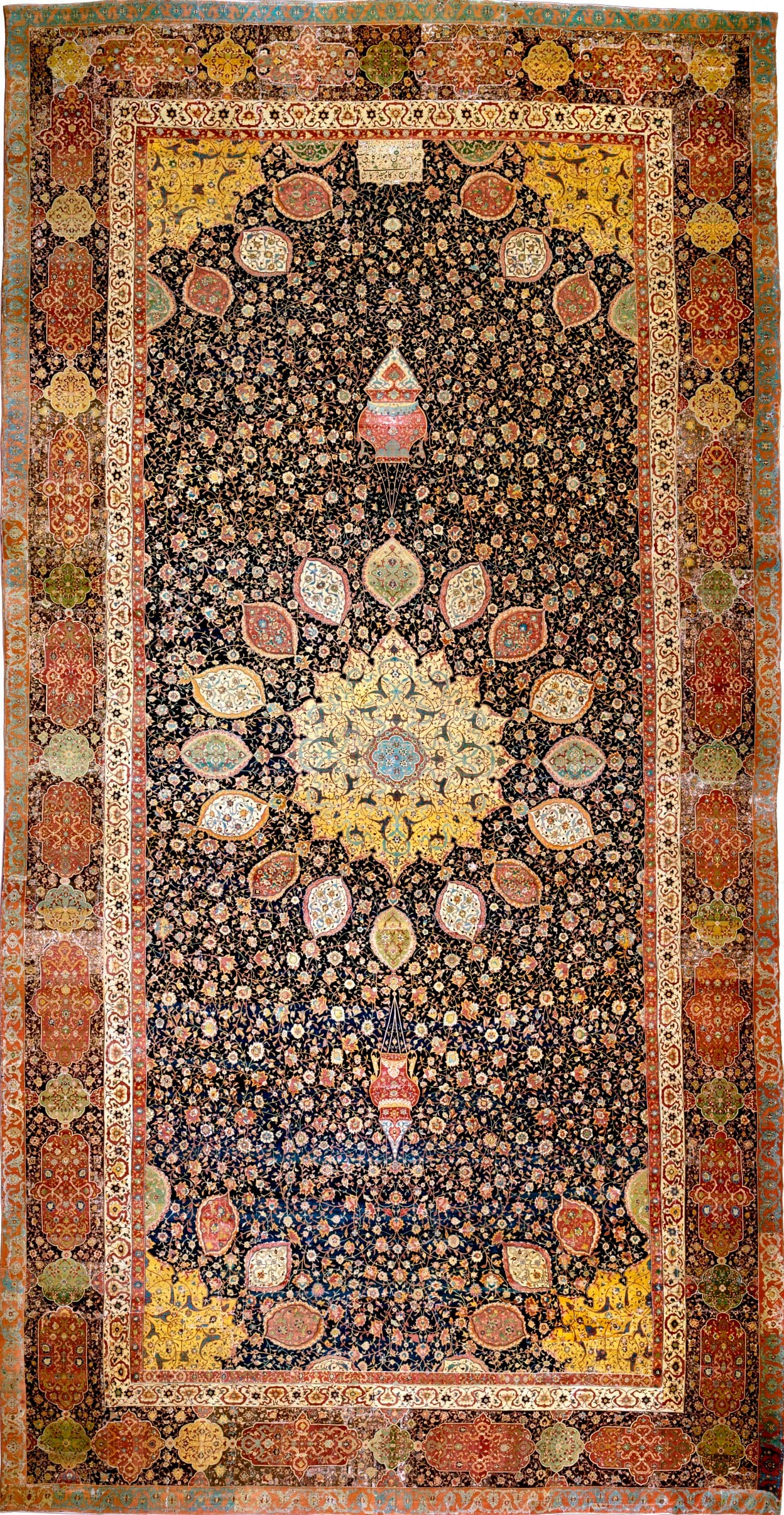
The Juunam mark is drawn from a Persian carpet — a stand-in for the kind of object you tend, and don’t want to lose. Carpets like this one have outlived the people who knotted them, the rooms they were made for, and the markets they were traded in. The software is built in the same spirit: careful records, made to last.
Juunam·/ ˈdʒuː.nəm /
Image: The Ardabil Carpet — Iran, 1539–40. Collection of the Victoria & Albert Museum, London. Public domain.